Please ensure Javascript is enabled for purposes of website accessibility

2026 VHA Expo

Veterinarians, Veterinary Technicians, and Practice Managers are invited to attend this one-day event filled with knowledgeable and inspiring speakers!
 

In addition to a lineup of fantastic speakers, industry partners will be at the Expo Market Place, showcasing the latest products and services available.

The VHA Expo features an opening keynote, four program tracks, and closing keynote, covering content for all members of your veterinary team! The 2026 VHA Expo is worth up to 6 CE credits. 

Date: Friday, November 13th, 2026 | 8am – 4:30pm 

Location: DoubleTree by Hilton Hotel Bloomington

Pricing:
Early Bird – ENDS October 9th!
Member: $100
Non-Member: $150

General Admission (after October 9th)
Member: $140
Non-Member: $200

Click Here to Book Your Room at the DoubleTree by Hilton Hotel Bloomington!

Cancellation Policy:
Cancellations received on or before November 6, 2026 will receive a full refund. Cancellations after this date are non-refundable. All cancellations must be submitted in writing to [email protected].

Days
Hours
Minutes
Seconds

Registration for the 2026 VHA Expo is now OPEN!

2026 VHA Expo Sessions

Keynotes

Opening Keynote

Speaker – Sarah Wooten, DVM, CVJ

Dr. Sarah Wooten, DVM, CVJ is a licensed veterinarian and certified veterinary journalist with extensive experience in clinical practice, veterinary media, education, and brand advisory work. She works as a veterinary content strategist and brand advisor at the intersection of animal health, marketing, and regulatory responsibility.

Sarah helps pet brands earn trust through clear, evidence-based communication and works at the intersection of animal health, marketing, and regulatory responsibility, translating science into messaging that is accurate, credible, and human. 

Keynote – “Permission Slip: A Veterinary Keynote for People who Forgot They’re Allowed to Want More”

Be perfect. Be useful. Don’t take up too much space. Don’t disappoint anyone. Sound familiar? In veterinary medicine, the invisible rules we live by often end up quietly running our lives. 

In this funny, heartfelt, and energizing keynote, [Name] shares stories from their remarkably non-linear veterinary career to challenge the script we’ve all been handed. Together, we’ll explore the messy realities of burnout, identity, and confidence—and rediscover what happens when we stop waiting for permission to build a career (and life) that actually fits. 

Learning Objectives:

  • Identify and unpack invisible expectations: Recognize the unwritten industry rules 
  • Reframe Career Trajectories: Evaluate personal career milestones without guilt, learning how to leverage non-linear paths and pivot without losing professional identity. 
  • Reclaim Personal Agency: Develop practical strategies to set boundaries, build authentic confidence, and make career decisions that align with personal values. 

Closing Keynote

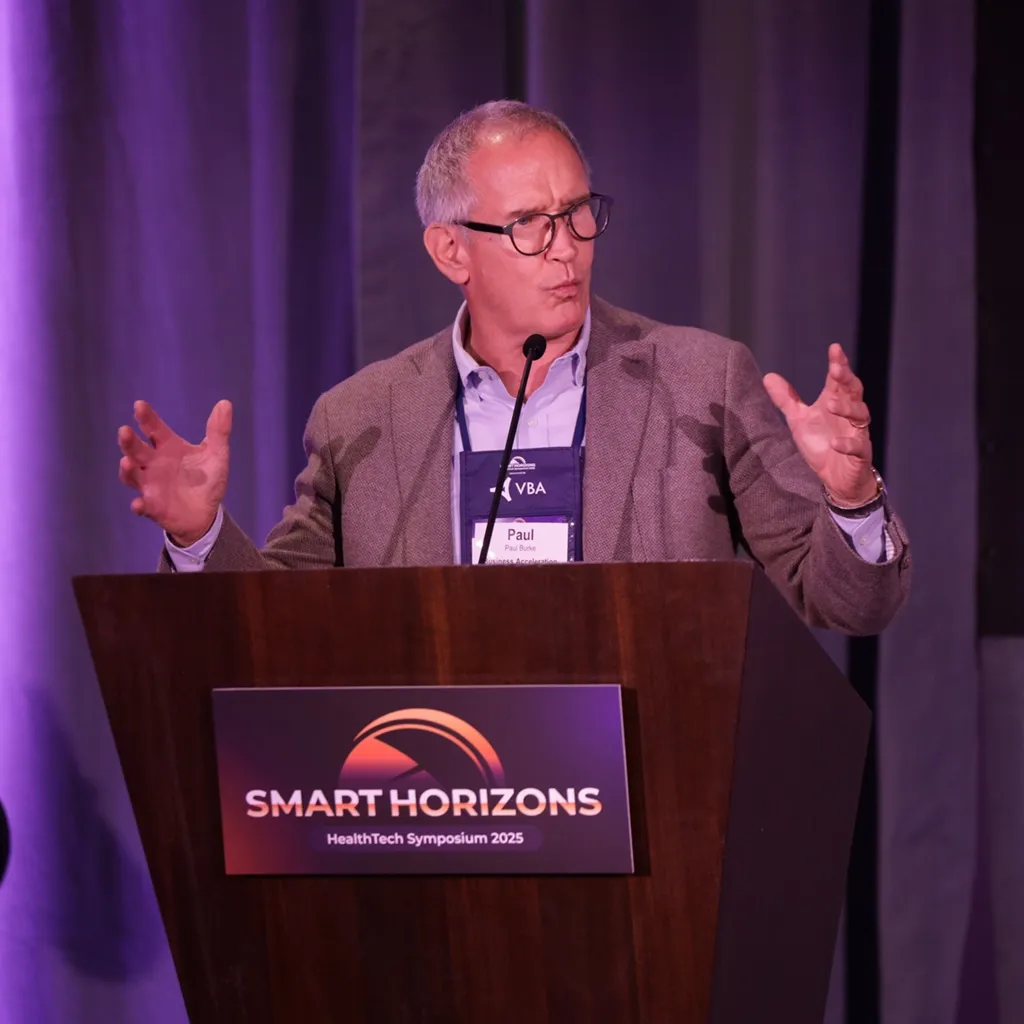
Speaker – Paul Burke

Paul Burke has over 30 years of sales and marketing leadership managing local, corporate, and global teams. He has also been an entrepreneur; owning, leading, and successfully exiting several businesses. Paul enjoys working with entrepreneurs and leadership teams as a teacher, facilitator, and coach, helping them get more out of their business and work life, “Putting the fun back into dysfunctional.”

Serving as an Officer in the U.S. Army and as a Company Commander during Operation Desert Storm, he learned the value of great leadership, teamwork, and the critical importance of execution. Without those elements all the best plans in the world become just words on a page.

Paul has a Bachelor of Science degree in Business & Speech Communication from the University of Minnesota and a Master of Business Administration in Entrepreneurial Management from the University of Dallas.

Keynote – “Creating Your Game Changing Customer Experience”

Every business operates in a competitive environment. To succeed we need to be
intentional about how we retain and grow our current clients and continue to bring in
new clients on a regular basis. We also must make sure we are gaining and retaining
the right clients for our business. A great client experience reflects your organizations
culture and requires activation at all levels of your organization.
 

Participants will walk away with a clear understanding of:

  • Your organizational culture & core values
  • How to identify your ideal customer.
  • Designing and communicating your customer journey.
  • Creating an effective and efficient communication strategy.
  • Implementation of tools to empower your team to serve your customers

Spectrum of Care

Track – Spectrum of Care

Speaker – Kate Boatright, VMD

Dr. Kate Boatright is a speaker, author, and practicing small animal veterinarian with a passion for connection with colleagues and clients. Since graduating from the University of Pennsylvania in 2013, Boatright has worked in rural Pennsylvania as a general practitioner and emergency clinician. She began speaking and writing in 2019 and has since published numerous articles in veterinary trade magazines and academic journals, self-published the Veterinary Mentorship Manual, and is a contributing author to several upcoming textbooks. She has lectured at veterinary conferences around the country and is a frequent presenter in industry webinars and veterinary schools on the topics of spectrum of care and mentorship. Her passion for access to care and creating partnerships with clients keeps her in the clinic part-time, allowing her to consistently adapt and enhance her teaching with client and patient stories. In her remaining time, she stays busy training for her first marathon, reading, and watching movies with her husband, son, and cats.  

Emergency Stabilization for General Practitioners

This presentation will provide general practitioners with a practical, step-wise approach to the assessment and stabilization of small animal emergency cases. Considerations for patient transfer to an emergency/specialty hospital as well as communication tips with emergency clinicians will be discussed. A case-based approach will be used to discuss common case presentations including trauma, respiratory distress, blocked cats, and more. A practical approach to fluid therapy, pain management, and other emergency treatments will be reviewed in a case-based format. Key client communication points for common emergency presentations will be discussed. Limitations of general practice in managing emergencies will be acknowledged. 

Managing Common Emergencies on a Budget

 Emergencies are inevitable in veterinary practice, and they often create immense financial stress for pet owners. A 2025 survey found that 65% of pet owners could not pay more than $1,000 for life-saving treatment. Unfortunately, standard estimates for treatment of common emergencies–such as pyometra, feline urethral obstruction, parvovirus, and foreign bodies–often exceed this amount, even in a general practice setting. 

When the difference between a life-saving procedure and euthanasia comes down to the client’s bank account, veterinarians must get creative. Spectrum of care practice offers us a solution. Instead of feeling like we must either approach a case “by the book” or do nothing, we can partner with the client to offer alternative plans that are more budget-friendly and meet the individual client’s goals. 

But these alternative plans may make us uncomfortable at times. You may find yourself asking, ‘Does letting the sun set on a pyo and waiting to do surgery the next day open me to increased liability?’ In short, the answer is no–as long as you educate clients on the available options and obtain informed consent with the plan that is chosen. As available literature supporting spectrum of care options grows, veterinarians can increase their confidence in approaching cases in an alternative way. 

This session will review a practical approach to common emergencies including GI obstruction, blocked cats, pyometra, and parvovirus. We will review the current evidence for a spectrum of care approach for each of these conditions and the key components of obtaining informed consent when pursuing a non-traditional option. You’ll leave this session with a practical game plan you can use to help more pets in your practice, even when finances are tight. 

How to Manage Chronic Diseases without Breaking the Bank

As general practitioners, we often find ourselves balancing patient quality of life with client limitations. While these are often financial, other concerns such as caregiver burden, patient cooperation, and scheduling limitations can also impact the success of the treatment plan. Join an experienced general practitioner for a discussion of managing chronic diseases in practice with a focus on navigating client limitations. We will review the current evidence for a variety of management strategies for conditions such as Addison’s disease, congestive heart failure, Cushing’s disease, and more. 

Doing What's Right When Resources are Tight: Practical Antimicrobial Stewardship in Spectrum of Care

Rising costs of veterinary care and client financial limitations can make antimicrobial stewardship feel like a dream rather than an achievable goal. Ideally, veterinarians combine physical examination findings with diagnostics like cytology, culture, and laboratory testing to guide antibiotic use—but each test comes with a price tag. As more practitioners embrace spectrum of care medicine, they are challenged to balance judicious antibiotic use with budget-conscious treatment plans. At first glance, these two priorities can feel at odds. 

The good news: they don’t have to be. In this session, we’ll explore why the tension between antimicrobial stewardship and spectrum of care arises and how to navigate it in daily practice. We’ll discuss how to use available tools—such as practice guidelines and antibiograms—to make informed prescribing decisions, even when ideal diagnostics aren’t possible. Finally, we’ll share client communication strategies that educate pet owners on the value of testing while remaining compassionate about their limitations. 

Attendees will leave with practical tools and a renewed confidence that it is possible to treat patients and support clients with a spectrum of care approach and be a good antimicrobial steward. 

Neurology

Track – Neurology

Speaker – Jessica Wagner, DVM, MS, DACVIM

Dr. Wagner is Assistant Professor of Neurology and Neurosurgery at the University of
Minnesota. She received her DVM from Mississippi State University in 2016. Following
internships, Dr. Wagner worked relief for several general practices around Philadelphia, PA.
She completed her Neurology and Neurosurgery residency at University of Illinois in 2025.

A User-Friendly Guide to the Neurologic Patient

An overview of the neurological exam and neurolocalization for
the busy practitioner, including how to use exam findings and simplified rationale for accurate localization, differentials, and treatment plans.

Learning Objectives:

  • Review the neurological exam and neurolocalization in small animals
    and importance of accurate localization for formulating differential
    diagnoses and treatment plans.
  • Understand how to broadly neurolocalize based on readily observed abnormalities and hallmark signs on neurological exam.
  • Understand how to narrow your localization based on specific
    neurological exam findings.

Neuro Exam Hacks and Unique Differentials for the Feline Patient

The quirks and tips for performing a neurological exam on the (sometimes difficult) feline patient, also including feline specific neurological diseases and neurological manifestations of systemic disease in cats.

Learning Objectives:

  • Review specific tips for successful neurological examination in cats
  • Review common neurological manifestations of systemic diseases in cats
  • Review common primary neurological diseases in cats

Approach to the Down Dog: Disc Disease and Beyond

This presentation will cover primary differentials for acute myelopathies in the dog, utility of in-house diagnostics, and when to refer. Includes information from the 2022 ACVIM Consensus Statement on diagnosis and management of acute canine thoracolumbar intervertebral disc extrusion.

Learning Objectives:

  • Create a reasonable differential list for patients presenting for acute myelopathies based on signalment, history, and exam findings
  • Understand the utility of in-house diagnostics (baseline blood work, radiographs, infectious disease testing)
  • Review the principles of medical management for presumed acute intervertebral disc extrusions, expectations for recovery, and potential complications
  • Recognize myelopathy cases for urgent or emergent referral versus cases that can be reasonably managed conservatively

A Tailored Approach to Idiopathic Epilepsy

This presentation will review canine idiopathic epilepsy, choosing and adjusting medications, and reasonable rescue interventions, with a focus on forming personalized plans for individual patients, rather than a “one size fits all” approach. Includes information from the ACVIM Consensus Statements on management of seizures.

Learning Objectives:

  • Recognize seizures (isolated, cluster, status epilepticus) versus other episodic medical events.
  • Formulate reasonable differentials for a patient with seizures, and understand the criteria for idiopathic epilepsy
  • Understand the essential principles of seizure management, including maintenance therapy, rescue (“at-home”) strategies, and need for emergency intervention
  • Understand how to tailor seizure medications with consideration to individual patient needs, seizure frequency/severity, and owner compliance.

Hematology

Track – Hematology

Speaker – Holly Brown, DVM, PhD, DACVP 

Holly Brown, DVM, PhD, DACVP began her veterinary career in small animal practice before completing a residency and PhD in clinical pathology. Dr. Brown remained as a faculty member in academia until joining a busy hybrid practice as an on-staff clinical pathologist. More recently, she joined Antech Diagnostics as their Chief Veterinary Educator. 

Pale Patient Panic! Anemia Case Challenge 

Anemia is one of the most common CBC findings in our sick veterinary patients. This case-based session will challenge attendees to utilize the entire CBC, including both automated data and cytograms, as well as blood film changes to properly diagnose a variety of causes of anemia.  

Learning Objectives:

  • Proper evaluation of anemia, including identification of regeneration based on automatic reticulocyte count and blood film review as well as understanding of RBC indices
  • Underscore importance of blood film review and gain further confidence in identifying morphology changes of greatest significance  
  • Explore ancillary diagnostic tests available to work-up the diagnosis of anemia

Loco Leukograms: Making Sense of Confusing CBC Results 

Diagnostic blood work, and its proper interpretation, is vital in helping our sick patients. In this case-based session, tips will be shared for evaluation of CBC, including important leukogram patterns and paired microscopic review of WBCs on the blood film to recognize key morphologic changes. Learning will be case based to engage attendees and provide practical and immediately useful knowledge for everyday practice.  

Learning Objectives:

  • Identify common leukogram patterns from CBC data 
  • Correlate WBC data with blood film review to identify characteristic changes 
  • Identify inflammation, toxic change, and atypical cells in circulation that support underlying malignancy 
  • Recognize value in trending of leukogram data to provide important clinical feedback 
  • Understand ancillary testing available to provide further diagnostic information for proper case management  

Platelet Problems and Coagulation Conundrums: Interpreting  thrombocytopenia and coagulation testing 

Diagnostic blood work (and its appropriate review) is vital in successfully managing the bleeding patient. In this interactive session, multiple cases will be presented that emphasize the importance of understanding blood work results, in particular evaluation of reported  thrombocytopenia and tips for coagulation testing.   

Learning Objectives:

  • Proper investigation of reported thrombocytopenias 
  • Identification of platelet clumping oncytograms and stained blood film 
  • Determine an estimated platelet count on stained blood film 
  • Understand testing options and important tips for coagulation evaluation 

Tying It All Together: Turning the CBC into a Diagnostic Powerhouse

The CBC is discussed as a single test, when in truth it is comprised of 20-25 different values, as well as important details about cell morphology to complete the picture. Understanding each component of the CBC, as well as the associated cytograms produced by our current automated hematology analyzers, is essential to sensitively and accurately diagnose and trend disease. In this case-based session, I will review the entirety of the CBC data, including some of the newer but lesser understood reported parameters that guide proper interpretation. Additionally, the paired cytograms will be reviewed, in technology and interpretation, to provide essential clinical insights beyond the numbers, such as detection and trending of inflammation and identification of immature and activated cell populations. Finally, for each case, key microscopic findings will be discussed, building your confidence around what the morphologic changes mean for your patients.    

Learning Objectives:

  • Learn the development and clinical insights provided by newer reported CBC parameters 
  • Understand the technology behind the generation of the accompanying CBC histograms and scattergrams and how to interpret key pathologic processes 
  • Gain confidence in recognizing key microscopic blood film findings and the clinical insights they provide

Mindful Management

Track – Mindful Management

Speaker – Sarah Wooten, DVM, CVJ

Dr. Sarah Wooten, DVM, CVJ is a licensed veterinarian and certified veterinary journalist with extensive experience in clinical practice, veterinary media, education, and brand advisory work. She works as a veterinary content strategist and brand advisor at the intersection of animal health, marketing, and regulatory responsibility.

Sarah helps pet brands earn trust through clear, evidence-based communication and works at the intersection of animal health, marketing, and regulatory responsibility, translating science into messaging that is accurate, credible, and human. 

From Trigger to Triage: Mindful Management 101 for Veterinary Teams

This session helps veterinary teams recognize what is really happening when clients, coworkers, or even team members become reactive. Attendees will learn how fear, caregiver burden, unmet needs, and fight/flight/freeze/fawn responses show up in veterinary practice, and how simple triage tools can reduce drama, strengthen professionalism, and help teams respond instead of react.

Learning Objectives:

  • Recognize the Root Causes of Reactivity: Identify how fear, caregiver burden, unmet needs, and stress responses present in clients, coworkers, and team members during veterinary interactions. 
  • Apply Triage Tools for Conflict Reduction: Utilize simple, actional triage strategies to de-escalate high-emotion situations. 
  • Shift from Reaction to Professional Response: Implement techniques that foster self-regulation and thoughtful communication. 

Tactical Responder: Mindful Management 201 for Veterinary Teams

Building on Mindful Management 101, this session turns the mirror inward. Attendees will explore what happens inside their own nervous system during stressful interactions and identify their go-to response patterns under pressure in a fun, relatable, “oh no, that’s me” kind of way. The focus is on building self-awareness, emotional choice, and personal control so veterinary professionals can respond with intention instead of letting stress run the show. 

Learning Objectives: 

  • Map Personal Stress Responses: Identify individual nervous system triggers and go-to behavioral patterns that emerge during high-pressure workplace interactions. 
  • Enhance internal Self-Awareness: Recognize physical and emotional stress signals in real time to pause momentum before defaulting to knee-jerk reactivity. 
  • Practice Intentional Emotional Choice: Utilize self-regulation strategies to gain personal control, allowing veterinary professionals to respond with conscious intention rather than letting stress dictate their actions. 

Don’t Take the Rage Bait: Mindful Management 301 for Veterinary Teams

This is a communication and conflict-management session that helps veterinary teams recognize emotional escalation patterns and choose responses that protect the client relationship, team morale, patient care, and practice flow. 

Learning Objectives: 

  • Identify Emotional Escalation Patterns: Recognize early indicators and stages of emotional escalation in veterinary client and team interactions before conflicts reach a crisis point. 
  • Apply De-escalation Strategies: Select and implement communication techniques that resolve conflict while safeguarding practice flow and patient care standards. 
  • Protect Team Morale & Client Relationships: Utilize targeted conflict-management responses that de-escalate tension without damaging client trust or workplace team dynamics. 

Emotional Biosecurity: Mindful Management 401 for Veterinary Teams

This session zooms out from the individual interaction to the whole team. Attendees learn how stress spreads through a hospital, how venting and emotional contagion can turn one hard moment into an all-day culture problem, and how to interrupt spirals, debrief cleanly, reset the team, and prevent one difficult interaction from taking down the whole day. 

Learning Objectives: 

  • Recognize Emotional Contagion Dynamics: Analyze how individual stress, venting, and negative emotional spirals spread across a veterinary hospital team to impact overall workplace culture. 
  • Implement Interruption & Reset Strategies: Apply practical techniques to interrupt active emotional spirals and reset the team environment to keep a single difficult interaction from disrupting the entire day. 
  • Execute Clean Debriefing Protocols: Utilize structured, clean debriefing practices following high-stress moments to process difficult events constructively while protecting team morale and focus. 


Our Sponsors