



Psychological safety, a term introduced by Amy Edmondson in the 1990’s, refers to a shared belief that a team is safe for interpersonal risk-taking. In practical terms, it means team members feel comfortable asking questions, raising concerns, admitting mistakes, or offering alternative ideas without fear of embarrassment or punishment.
In a veterinary hospital, it looks like:
Sometimes, psychological safety is labeled as “lowered standards” or “avoiding accountability”. It is important to understand that high performing teams need both accountability and safety. When accountability and safety are both present, teams operate with clarity and confidence. When one is missing, communication can “go quiet”. This is where the opportunity lies for leaders!
In veterinary medicine, open communication protects patients, supports teams, and strengthens hospitals.
When team members hesitate to speak up, small issues become larger ones. Miscommunications affect patient care, client experience, and a team’s ability to bond. Mistakes are corrected quietly rather than brought up to leadership.
Research from Google’s Project Aristotle found that of 180 teams assessed, those who were highest performing were also those where team members felt comfortable expressing their thoughts and ideas openly, leading to more productive discussions and innovative solutions. In other words, the highest performing teams were those where people felt safe contributing fully.
Hospitals that cultivate psychological safety often identify problems earlier, collaborate across job roles, and have a higher consistent performance under pressure.
More than any policy, mission statement, or training program, leadership behaviors influence whether people feel safe to speak up, ask questions, and continue to grow.
Often, team members are subconsciously asking themselves questions like:
Is it okay to speak up here?
What happens if I make a mistake?
Can I ask for clarification or offer a different perspective?
The answers are shaped not by policy, but by patterns.
For veterinary leaders, building psychological safety starts with observable, consistent actions.
Psychological safety grows when leaders consistently demonstrate behaviors that signal trust. There are five behaviors that can truly influence team members and help them choose to speak up: vulnerability, consistency, transparency, accountability and empathy.

Vulnerability in leadership does not mean oversharing or lowering authority. It means demonstrating that learning is valued more than perfection.
When leaders acknowledge their own growth areas, it reduces the fear around mistakes for everyone else. Team members are more likely to raise concerns early when they see that improvement, not perfection, is the standard.

Team members know their leaders. If a leader’s reactions shift dramatically based on their stress levels, mood, or circumstance, the team can become cautious.
Consistency means:
Predictability builds trust. When team members know what to expect, they are more willing to engage openly, even in difficult conversations.

Silence often grows in veterinary hospitals where decisions feel sudden or unexplained.
Transparency means clearly communicating:
When team members understand the reasoning behind decisions, they are more likely to align with them, and more likely to ask clarifying questions rather than resist quietly.

Psychological safety does not mean avoiding difficult conversations. In fact, the absence of accountability erodes that safety quickly. When expectations are addressed clearly and fairly, high performers stay engaged and standards remain strong.
Accountability builds safety when it is:
When teams see that problems are addressed fairly, without public shaming or favoritism, trust increases.

Empathy, seeing and feeling something from another’s perspective, does not invalidate accountability. It ensures accountability is delivered in a way that preserves a team member’s dignity. Leaders who acknowledge the human side of situations create space for honest dialogue.
This might sound like:
When people feel heard, they are more receptive to correction and more likely to speak up again in the future.
A few years ago, I was visiting a veterinary hospital where the owner genuinely wanted her team to take more initiative. She cared deeply about the practice and believed in her team’s potential.
During my visit, I noticed a pattern. When a team member approached her with a concern, she immediately jumped into problem-solving mode. Her intentions were good; she wanted efficiency and solutions. But in her urgency, phrases like “you should…” or “if you would have…” slipped into the conversation.
She didn’t realize that those responses were quietly discouraging initiative. Team members chose not to voice their ideas, instead allowing her to decide the path forward.
Once the owner became aware of the pattern, she made a simple shift. She practiced pausing before responding and replaced correction with curiosity:
“Tell me more.”
“What do you think we should try?”
“What are you seeing that I might be missing?”
The change was small but powerful. Over time team members began offering ideas more freely and brought concerns to her quicker. The owner didn’t lower her standards; she adjusted her response pattern. And in doing so, psychological safety in the hospital improved dramatically.
Pause Before You Respond
The next time someone brings you a mistake or concern, pause for five seconds before replying. Then lead with curiosity. A simple, “Thank you for telling me, let’s look at this together,” can shape future communication more than you realize.
Invite One Additional Voice
In your next meeting, intentionally ask, “Does anyone see something I might be missing?” This normalizes and reinforces that speaking up is expected, not risky.
Explain One “Why”
The next time you communicate a change, take one extra minute to explain the reasoning behind it. When team members understand the purpose, they are more likely to engage, align, and ask thoughtful questions.
Building a hospital where people speak up is not about perfection. It is about being intentional. The way leaders respond, especially in moments of concern, correction, or stress, sends powerful signals about whether voices are welcome. These small, intentional actions shape each hospital and are within every leader’s reach.
Stacy Gentry joins the Blue Heron Consulting team as an Operational Coach, bringing over twenty years of veterinary experience to our clients. Her journey in veterinary medicine started as a Client Service Representative at Wellington Veterinary Hospital (WVH) in 2001. In the years ahead, she found opportunities to grow into new positions that allowed her to focus on her Why: connecting with and caring for animals. In 2016, Stacy become the practice manager and was able to make valuable changes to both the hospital and culture. These changes propelled WVH into a four-doctor hospital. In 2018, she fulfilled a lifelong dream and became a practice owner. Along the way, Stacy attended Veterinary Management Institute and coached communications to third-year veterinary students at Colorado State University.
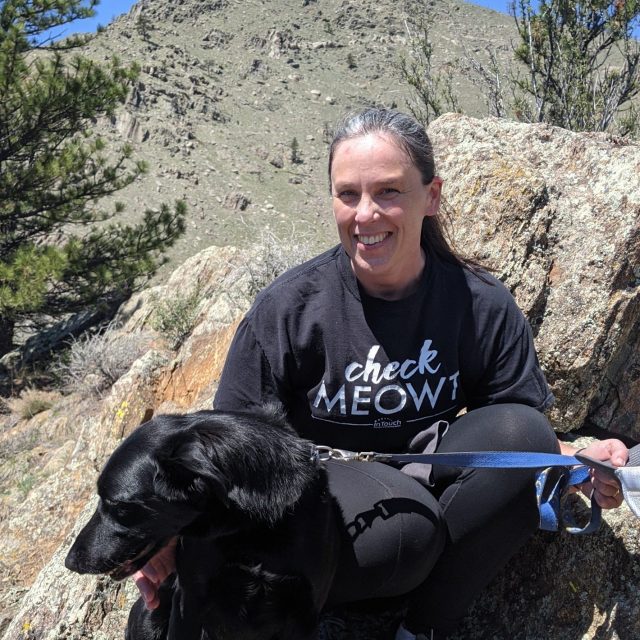
WVH was purchased in 2020 and Stacy found a new opportunity coaching other practice managers. This eye-opening experience allowed her to help cultivate an environment that allowed leadership teams and hospitals to shine. Stacy knew this was her new path – her new Why. When Stacy is not coaching, she enjoys spending time with her husband, Vince, her children, and their numerous pets. She is an avid hiker and loves kayaking and camping in the beautiful Rocky Mountains; and she is always on the hunt for the next great beer at the many breweries in Colorado!